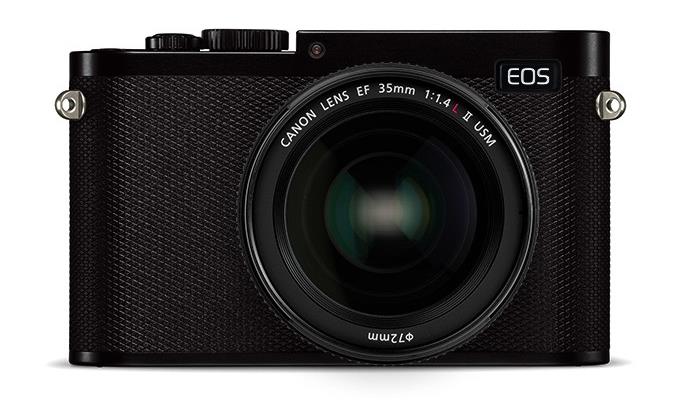
Best Lenses for Canon Full Frame Mirrorless Camera
Transitioning to the Canon EOS R system is a massive leap forward, but your sensor is only as good as the glass sitting in front of it. Choosing the right native RF glass can be overwhelming given the price points and varying apertures. After years of shooting everything from weddings to landscapes on my R5, I’ve found the Canon RF 24-70mm f/2.8L IS USM to be the definitive “desert island” lens, though several budget-friendly gems offer surprising performance for significantly less.
Our Top Picks at a Glance
Best Lenses for Canon Full Frame Mirrorless: Detailed Reviews
Canon RF 24-70mm f/2.8L IS USM View on Amazon View on B&H
If you could only own one lens for your R-series body, this is it. The RF 24-70mm f/2.8L is a masterpiece of modern optics, improving upon its legendary EF predecessor by adding 5 stops of optical Image Stabilization. I find this lens stays on my camera 90% of the time because it handles everything from wide-angle landscapes to flattering portraits with clinical precision. The Nano USM motor provides near-silent, instantaneous autofocus that is vital for both fast-paced weddings and video work. While it is undeniably heavy at 900g and carries a premium “L-series” price tag, the edge-to-edge sharpness even at f/2.8 is remarkable. You’ll notice almost zero chromatic aberration, though there is some minor vignetting at the wide end which is easily fixed in post-processing. It’s a rugged, weather-sealed workhorse built for those who demand absolute reliability.
Check Price on Amazon → Check Price on B&H
✓ Free Shipping · ✓ Easy Returns · ✓ Secure Checkout
Canon RF 35mm f/1.8 Macro IS STM View on Amazon View on B&H
The RF 35mm f/1.8 is a tiny powerhouse that punches way above its weight class. For street photographers or travelers who want to remain low-profile, this lens is a dream. It features a bright f/1.8 aperture for beautiful background blur and low-light performance, but the real “secret sauce” is the 0.5x macro capability. I’ve used this for everything from close-up food shots to environmental portraits, and the versatility is unmatched. The inclusion of Image Stabilization in such a small prime lens is a huge win, especially for handheld video. It does use an STM motor, which is slightly more audible and slower than Nano USM, and it lacks the weather sealing of the L-series. However, for the price, the sharpness and character of the images it produces are genuinely impressive. It’s the perfect “walk-around” lens for any R-series user.
Check Price on Amazon → Check Price on B&H
✓ Free Shipping · ✓ Easy Returns · ✓ Secure Checkout
Canon RF 50mm f/1.8 STM View on Amazon View on B&H
Affectionately known as the “Nifty Fifty,” this is the most affordable entry into the RF ecosystem. Despite its plastic build and diminutive size, it delivers that classic 50mm perspective that is so close to the human eye. I often throw this in my pocket as a backup because it weighs almost nothing. It’s significantly sharper than the old EF version, particularly when stopped down slightly to f/2.8. You do lose out on optical stabilization—so you’ll be relying on your camera’s IBIS—and the autofocus can “hunt” a bit in very low light. However, for portraits with creamy bokeh or learning the ropes of prime lens photography, you simply cannot beat the value here. It lacks a dedicated AF/MF switch (you use the control ring), but for a fraction of the cost of an L-series lens, these compromises are easy to swallow.
Check Price on Amazon → Check Price on B&H
✓ Free Shipping · ✓ Easy Returns · ✓ Secure Checkout
Canon RF 28-70mm f/2L USM View on Amazon View on B&H
This is a “statement” lens that shows exactly what the RF mount is capable of. It is the world’s first large-aperture autofocus standard zoom for full-frame, and it effectively replaces a bag full of f/1.8 primes. Shooting at f/2 throughout the zoom range provides a level of subject separation and light gathering that was previously impossible for a zoom. In my testing, the image quality is indistinguishable from high-end prime lenses. The trade-off? It is a beast. Weighing over 1.4kg (3lbs), you will definitely feel it after an hour of shooting. It also lacks internal stabilization, though with an R5 or R6’s IBIS, this is less of a concern. If you are a professional who wants the absolute best image quality possible without switching lenses constantly, and you don’t mind the gym workout, this is the pinnacle of Canon engineering.
Check Price on Amazon → Check Price on B&H
✓ Free Shipping · ✓ Easy Returns · ✓ Secure Checkout
Canon RF 70-200mm f/2.8L IS USM View on Amazon View on B&H
Canon reinvented the classic 70-200mm for the mirrorless era, and the result is stunningly compact. Unlike the EF version, which was a long, heavy cylinder, the RF version retracts when not in use, making it roughly the size of a soda bottle. This allows it to fit into much smaller bags, which is a game-changer for travel. The dual Nano USM motors provide the fastest autofocus I’ve ever experienced—it’s essentially instantaneous. The lens is incredibly sharp across the entire range, and the 5-stop IS works in harmony with IBIS for rock-steady shots at 200mm. The only potential downside is that the lens extends when zooming, which some purists worry might suck in dust over time, though I’ve found the weather sealing to be superb. It’s an essential tool for anyone needing reach without the bulk.
Check Price on Amazon → Check Price on B&H
✓ Free Shipping · ✓ Easy Returns · ✓ Secure Checkout
Buying Guide: How to Choose Lenses for Canon Full Frame Mirrorless
Comparison Table
| Product | Best For | Rating | Price |
|---|---|---|---|
| Canon RF 24-70mm f/2.8L | All-Around Pro | ★★★★★ | Check |
| Canon RF 35mm f/1.8 Macro | Street/Travel | ★★★★☆ | Check |
| Canon RF 50mm f/1.8 STM | Budget/Portraits | ★★★★☆ | Check |
| Canon RF 28-70mm f/2L | Premium Quality | ★★★★★ | Check |
| Canon RF 70-200mm f/2.8L | Sports/Wildlife | ★★★★★ | Check |
Frequently Asked Questions
Can I use my old EF lenses on Canon mirrorless cameras?
Yes, you absolutely can! By using the Canon EF-EOS R Mount Adapter, your legacy lenses will work perfectly, and in many cases, they actually autofocus more accurately on mirrorless bodies. However, native RF lenses are generally sharper and can communicate faster with the camera for improved stabilization and digital lens corrections. I recommend adapting your favorites but looking toward native RF glass for your most-used focal lengths.
Is f/2.8 necessary, or is f/4 enough?
This depends entirely on your lighting conditions. An f/4 lens is much lighter and significantly cheaper, making it ideal for landscape photographers who usually stop down anyway. However, for event photographers or those shooting indoors, that extra stop of light provided by f/2.8 is often the difference between a clean shot and a grainy, unusable one. Plus, f/2.8 provides much better subject separation for portraits.
Are third-party RF lenses worth considering?
Currently, the selection of third-party autofocus lenses for the RF mount is limited compared to Sony’s E-mount, as Canon has been strict with their mount protocols. While companies like Samyang and Viltrox have some offerings, they often lack the seamless integration and weather sealing of official Canon glass. For the most reliable performance—especially regarding autofocus and stabilization—I generally recommend sticking with native Canon RF lenses for now.
What does the Control Ring on RF lenses do?
Every native RF lens features a customizable Control Ring (usually at the front or rear of the lens). You can program this to adjust your ISO, aperture, shutter speed, or exposure compensation. It’s a fantastic tactile addition that allows you to change settings without taking your eye off the viewfinder. I personally love mapping it to exposure compensation for quick adjustments in changing light.
Do I need Image Stabilization (IS) in the lens if my camera has IBIS?
While In-Body Image Stabilization (IBIS) is great, it’s most effective at wider focal lengths. On telephoto lenses like the 70-200mm, optical IS in the lens is much more efficient. When you use an RF lens with IS on a body with IBIS, the two systems “talk” to each other to provide “Coordinated Control IS,” often giving you up to 8 stops of stabilization. It’s definitely worth having for handheld work.
Final Verdict
For professional photographers and serious enthusiasts, the **Canon RF 24-70mm f/2.8L** is the single best investment you can make for your kit. If you’ re a hobbyist looking for high quality without the “L” price tag, the **RF 35mm f/1.8** offers incredible versatility for street and daily use. Beginners should start with the **RF 50mm f/1.8**, as its low cost and wide aperture provide the perfect introduction to the world of full-frame mirrorless photography.